
It is an early morning in your central kitchen.
The first batch is already in the oven. Orders are lined up.
Production is planned.
Operations are moving as normal.
Until you start calling Vendors.
Your butter supplier quotes a new price, higher than last week.
By afternoon, cocoa prices have dropped sharply in the market, but your order is already locked at a higher rate.
By evening, milk prices are expected to rise again.
And Oil prices continue to fluctuate without a clear pattern.
Nothing about this is unusual anymore.
Food industry procurement challenges are becoming more complex than ever.
Prices don’t move once a season, they now move every few weeks.
Sometimes in opposite directions and sometimes without warning.
This isn’t inflation.
It’s volatility.
Food Industry Procurement Challenges in a Volatile Market:
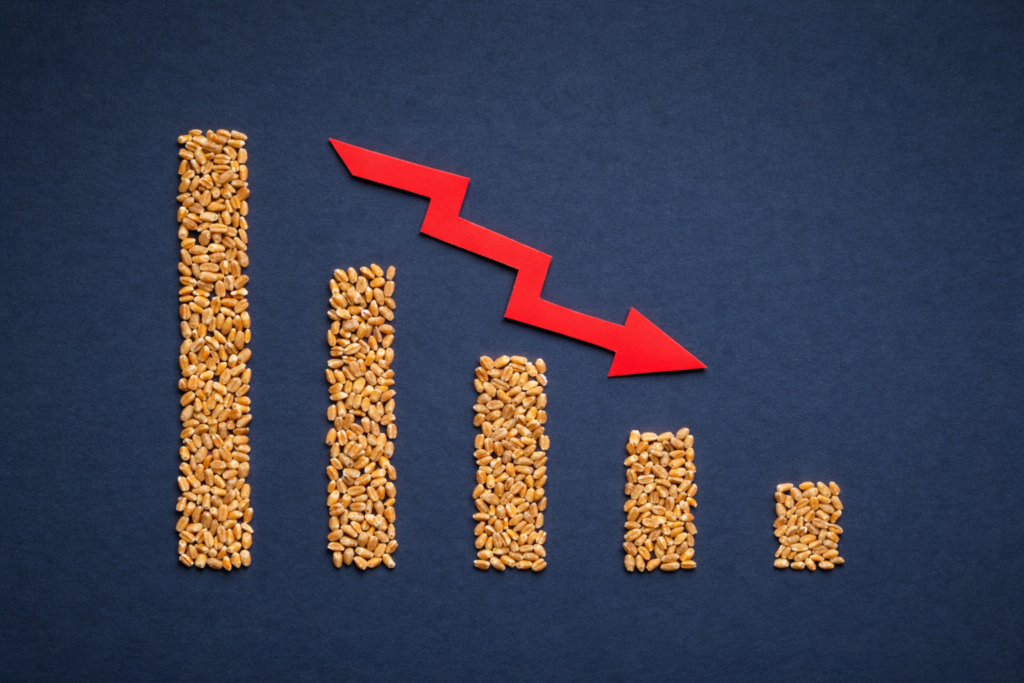
Most food businesses still manage procurement the way they always have, through calls, WhatsApp messages, and one “trusted” vendor per ingredient.
Which is why food industry procurement challenges continue to intensify.
1. When Raw Material Costs Move, Your Margins Move With Them
In most food businesses, raw material cost is tracked at purchase.
But its impact doesn’t stop there.
It flows directly into production cost.
And from there into product pricing and margins.
The problem is, this movement is rarely visible in real time.
Production continues based on standard recipes.
Sales continue at existing prices.
But raw material costs have already changed.
So what you’re producing today is no longer costing what you think it is.
And that’s where the leakage begins.
Because without accurate, real-time costing:
- You don’t know the true cost of each SKU
- You don’t know how much margin you’re actually making
- You don’t know when profitability has already dropped
In a volatile market, raw material is the most unstable component of cost.
And if that movement isn’t tracked and reflected in production costing, losses don’t happen suddenly.
They build silently, batch by batch, order by order.
2. No Rate Benchmark – Pricing Without Control
In most food businesses, procurement starts and ends with one vendor per ingredient.
That means one quote.
One version of the price.
No reference.
Comparing multiple vendors manually is time-consuming, so over time, businesses start depending on one vendor only.
That worked when prices were stable.
But in a volatile market, it becomes expensive.
Because without comparison and a benchmark:
- You don’t know if you’re overpaying
- You don’t know how the market is moving
- You don’t know if better options exist
Every price revision from the vendor becomes your new cost.
No comparison. No negotiation. No fallback.
You’re not buying at the best price.
You’re buying at the only price available to you at that moment.
And in a market where prices keep moving, that gap between what you pay and what you could have paid is where margins quietly disappear.
3. Reactive Buying = Expensive Buying
Volatility doesn’t wait for your planning cycle.
Orders come in.
Production starts.
And somewhere in between, a shortage surfaces.
There’s no time to evaluate. No time to compare.
A call is made in panic. An order is placed in hurry.
At whatever rate the market is quoting that day.
Not because it’s the right price but because production cannot stop.
Production drives urgency.
Urgency drives procurement.
Procurement drives cost.
And in a volatile market, that cost is rarely optimal.
Each emergency purchase locks in a price you didn’t choose.
Reactive buying doesn’t just increase cost.
It removes control over pricing entirely.
4. Uncontrolled Consumption = Hidden Cost Leak
In most food businesses, procurement doesn’t fail at buying.
It fails at usage.
Without controlled consumption:
– Recipes vary
– Quantities fluctuate
– Wastages increase & go unnoticed
Inventory is not updated and accurate.
What’s on paper isn’t what’s in the store.
What’s in the store isn’t what production actually consumes.
And in a volatile market, that gap becomes expensive.
Because every excess gram used, every batch wasted translates into additional procurement.
More buying.
At new prices.
Often higher than before.
The cycle repeats:
Uncontrolled consumption → inaccurate inventory → wastage → emergency buying → higher cost.
In a market where prices keep moving, you’re not just losing material.
You’re losing margin every time you replace it.
Solving food industry procurement challenges requires more than process changes, it requires system-level control.
Solving Food Industry Procurement Challenges with System-Driven Control.

Now imagine the same scenario, but with a Smart System in place.
Volatility isn’t going away.
Which means the problem isn’t the market.
It’s how you respond to it.
When procurement lacks structure, every price movement turns into a cost problem.
That’s where a Vendor Management System changes how procurement works and what it delivers.
1. Breaking Single Vendor Dependency
With traditional procurement, every ingredient is tied to one single vendor.
With Byte Elephants’ Vendor Management System (VMS), that changes.
RFQs are sent to multiple approved vendors simultaneously.
- You see multiple price points for the same ingredient
- You compare cost, availability, service, and reliability in one view
- You gain negotiation leverage backed by real data
You don’t rely on one quote anymore. You see the market in one view.
This doesn’t just give you options it also removes dependency structurally.
You’re no longer buying from a single vendor. You’re buying from the best available option in the market.
2. Price Visibility Becomes Continuous
In a volatile market, knowing today’s price isn’t enough.
You also need to know how prices behave.
With Byte Elephants’ VMS, every vendor’s pricing history is tracked:
- How often prices change
- How sharply they fluctuate
- How consistent they are over time
You don’t just compare the price. You compare price behavior.
Every vendor becomes measurable, not memorable.
3. Procurement Moves From Reactive to Planned
Volatility punishes delayed decisions.
With Byte Elephants’ VMS, procurement becomes system-driven:
- Stock levels trigger timely indents
- Purchase orders can be scheduled in advance
- Bulk buying aligns with demand and market movement
You don’t wait for shortages. You act before they happen.
Procurement shifts from reaction to positioning.
4. Consumption Becomes Controlled
Even the best procurement decisions fail without consumption control.
With Byte Elephants’ Recipe Management and Inventory Management:
- Production follows exact material requirements
- Inventory reflects real-time usage
- Wastage becomes minimal, visible and controllable
In today’s fluctuating market, every unit wasted is replaced at a new and mostly a higher price.
Thus, with smarter systems at hand, food industry procurement challenges which reflect in production challenges are efficiently managed.
5. Costing Becomes Real-Time:
Production Cost = Material Costs + Resource Costs + Utility
Raw material prices don’t stay in procurement. They also reflect in your product cost.
With Byte Elephants’, every minimal price change in Procurement:
- Updates production costing instantly
- Reflects at individual SKU-level
- Impacts margin visibility in real time
You don’t wait for reports to understand your business.
You see the impact as it happens.
From Vendor Dependency to Vendor Control: A Real Example
For many bakery and food businesses, the challenge isn’t just managing a few ingredients, it’s managing hundreds, each with its own price behavior and supplier dynamics.
That was the reality for Monginis Cakes.
With over 500+ raw material products to manage, procurement was becoming increasingly complex.
The bigger issue, however, wasn’t volatility alone.
It was visibility.
There was no clear way to track:
- How frequently a vendor was changing prices
- Whether a price increase was justified or inconsistent
- Which vendor was actually offering the most stable and reliable rates over time
Decisions were often made based on immediate availability or past relationships not on structured comparison or historical insight.
That’s when they implemented the Byte Elephants’ Vendor Management System.
Instead of reacting to price changes, the team could now:
- Track rate changes across vendors over time
- Identify patterns in price volatility and vendor behavior
- Compare suppliers based on consistency, not just latest price
The result wasn’t just better procurement.
It was a better control.
Vendor management became structured.
Decision-making became data-driven.
And the supply chain became significantly more stable even in a volatile market.
Procurement decisions don’t just stay in procurement.
They flow into production.
They define product cost.
They shape pricing and profitability.
In a volatile market, this connection becomes critical since every price movement downstream shows up in your margins upstream.
Ingredient prices will keep fluctuating.
Vendors will keep changing rates.
Markets will remain unpredictable.
That doesn’t change.
What can change is how your business responds to it.
The only question is:
Does your procurement system move with the market or lag behind it?
See how Byte Elephants’ ERP with integrated Vendor Management gives you control even when the market doesn’t.