
There comes a moment in every growing business when the founder realises something uncomfortable.
The business has grown. The systems haven’t.
What worked at 2 outlets doesn’t work at 10.
What was manageable with one warehouse becomes a nightmare across three.
What one person could track in their head now needs five people just to coordinate, and even then, things slip.
Orders get delayed.
Data doesn’t match.
Teams are working from different numbers.
And the founder, who should be thinking about the next city or the next product line, is instead stuck in a daily firefight just to keep today’s operations running.
This is the moment most businesses turn to technology.
And this is the moment most businesses make their biggest mistake, in selecting their food manufacturing software.
The Wrong Way Most Businesses Choose Food Manufacturing Software

The decision to adopt systems is the right one.
What happens next is where things go wrong.
Most businesses, when they start looking for food manufacturing software, fall into patterns that feel logical but quietly destroy the promise of technology altogether.
They chase big names, expensive, globally recognised platforms without checking whether those platforms were actually built for a food business, a franchise operation, or a distribution network like theirs.
They buy heavy food manufacturing software upfront, paying for features they won’t use for three years, implementing complexity they aren’t ready for, and spending months in a rollout that disrupts the very operations it was supposed to fix.
They stitch together the “best” tool for each function,
ERP from one vendor, DMS from another, HR software from a third, franchise ordering from a fourth, because each was recommended as best-in-class for its category.
And then they discover the problem nobody warned them about.
None of these systems talk to each other.
Data lives in four different places.
Reports from one system don’t match reports from another.
Every morning, someone is manually copying numbers from one platform into another.
And when something breaks, there are three vendors to call, three support tickets to raise, three queues to wait in, while operations are stuck and revenue is leaking.
Businesses end up managing systems instead of systems managing the business.
Growth makes it worse.
Every new outlet, every new distributor, every new franchise partner means more tools, more integrations, more complexity, more chaos.
The food manufacturing software were supposed to solve the problem. Instead, they became the problem.
Across Conversations with Business Owners, One Thing Kept Coming Up
After hundreds of conversations with business owners across India, food manufacturers, franchise brands, FMCG distributors, confectionery chains, a pattern emerged.
The same frustrations, in different words, from businesses of different sizes in different cities.
“We have an ERP but our distribution still runs on WhatsApp.”
“Our franchise orders come through a different system that doesn’t connect to the factory.”
“We have three vendors, three support numbers, and when something goes wrong, each one tells us it’s the other one’s problem.”
“We implemented a food manufacturing software two years ago. We’re still doing half our work in Excel.”
They had systems.
They didn’t have a system.
And that single distinction, one system versus many systems is what separates businesses that scale cleanly from businesses that scale into chaos.
The Byte Elephants Difference — And Why It Changes Everything
Studies on how complex systems are built show a clear pattern, businesses don’t build everything at once.
They start with a strong foundation and add to it over time, making sure each new piece fits in without breaking what’s already working.
Byte Elephants was built around one core belief:
You shouldn’t have to buy a system for a business you don’t have yet.
And you shouldn’t have to start over every time you grow.
The answer isn’t a massive, all-or-nothing ERP implementation.
And it isn’t a patchwork of best-in-class tools that never truly connect.
The answer is a platform.
A modular platform where every food manufacturing software is built to work on its own, and designed to connect as one when you’re ready to grow.
Here is what that means in practice.
You come to Byte Elephants with your current reality.
Not your future vision. Not what you hope to be in five years.
Where you are today, what’s painful today, what needs to work better today.
And you start there.
Maybe it’s the ERP for your manufacturing plant.
Maybe it’s the franchise ordering system because that’s where the chaos is most expensive.
Maybe it’s HREasy because payroll is a monthly nightmare.
You start with exactly what you need, nothing more, nothing less.
You go live.
Your team gets trained.
Operations stabilize.
You start seeing results.
And then, when the business grows, when you’re ready for the next step, you add the next software you need at that stage.
Not as a new food manufacturing software from a new vendor with a new implementation project and a new set of data that doesn’t match your existing data.
As a piece of the same platform.
Connecting natively. Instantly.
Because it was always designed to fit.
The Puzzle That Builds Itself As You Grow

Think of it this way.
A puzzle piece is complete on its own.
It has a shape, a picture, edges that mean something.
You can hold it and it makes sense.
But place the next piece beside it and something happens, it clicks into place. No glue. No force. No adapter.
The edges align perfectly because they were always meant to.
The picture gets larger. The structure gets stronger.
That is what Byte Elephants’ modular platform does for your business.
Every module,
the Plant ERP,
the Distribution and Sales system,
the Franchise Management System, the POS,
the HRMS,
the Warehouse system,
the Vendor Management,
every single one of these works completely on its own.
You can implement just one and run your business on it.
But the moment you add the next one, it connects.
Seamlessly. Automatically.
Because they were built together, from the ground up, as parts of one ecosystem.
No integration project. No middleware.
No consultant spending three months building a custom connector between two systems that were never designed to talk.
It just works.
And as you keep adding, as your business keeps growing, the platform doesn’t get more complicated.
It gets more complete.
More powerful.
More intelligent.
Growth strengthens the system instead of straining it.
Another Thing That Makes the Difference in Food Manufacturing Software
Technology is only as good as the support behind it.
One of the most common frustrations Byte Elephants heard from businesses before they switched, support for their food manufacturing software was a nightmare.
Raise a ticket.
Wait in a queue.
Get assigned to someone who doesn’t know your business.
Explain everything from the beginning.
Get reassigned.
Wait more.
All while your operations are stuck and your business is losing money.
For the support team, it was a tech ticket.
For the business, it was an operational emergency.
Byte Elephants doesn’t work that way.
Every client gets a dedicated SPOC, one person who knows your business from day one of implementation.
One call.
No queue.
No explaining your context to someone new every time.
Someone who understands that a system issue isn’t just a tech problem.
It’s your business on the line.
How This Looks for a Real Business
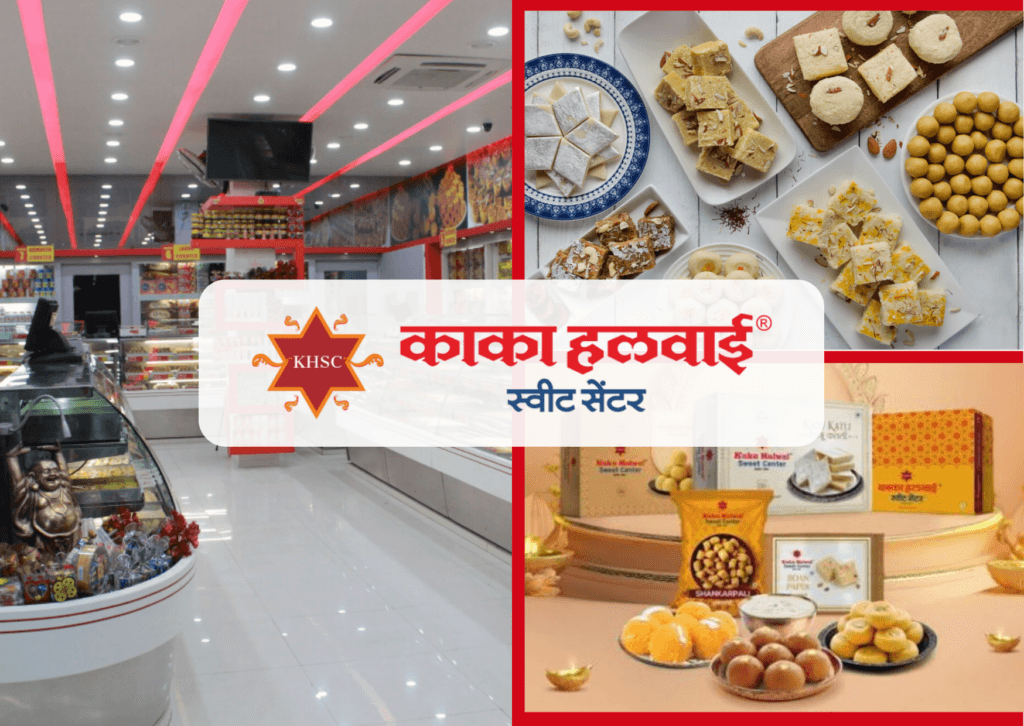
Kaka Halwai Sweets and Namkeen has been in the industry since 1892.
Six generations of a family, building a brand that Pune trusts for quality and consistency.
3 manufacturing plants. 25 outlets.
Festival seasons that push every operation to its absolute limit.
They had food manufacturing softwares. Recognised names. Expensive implementations. Multiple vendors.
And none of it worked as one.
Data moved slowly between systems.
Syncs didn’t align.
What showed in one system didn’t match the other.
Orders didn’t flow cleanly from outlet to factory.
Coordination between plants and shops felt disconnected.
Simple decisions like how much to produce, what to dispatch, which outlet needed restocking, were taking longer than they should.
They had invested in technology.
But they were still running the business manually in the gaps between their systems.
That’s when they came to Byte Elephants.
They didn’t implement everything at once. They started with what they needed most.
Went live. Stabilized.
Then added the next piece, which connected instantly, because it was always part of the same platform.
Today, everything runs as one connected flow.
From raw material procurement to production, from dispatch to outlet counter, from franchise orders to factory planning, one system, one source of truth, one complete picture.
And as they grow, new outlets, new products, new locations, new capacity, the system doesn’t need to be rebuilt.
It simply supports the scale.
Kaka Halwai didn’t just implement software.
They built a platform.
The Foundation Matters More Than You Think
Growth is not sudden.
It is gradual, incremental, and built on what came before.
The businesses that scale without chaos are not smarter or luckier.
They made one decision differently, they chose a platform that could grow with them instead of software they would eventually have to replace.
Byte Elephants’ modular platform for food manufacturing was built for exactly this.
Start with what you need.
Build as you grow.
Connect everything as one.
No rework. No starting over. No chaos.
You don’t need to transform your entire business overnight.
You just need to start on the right foundation.
Ready to build yours? Talk to the Byte Elephants team, one conversation, zero jargon, complete clarity on what your business actually needs.