
Your payroll is processed. Salaries are credited. Attendance is locked.
But then someone asks:
“Was the PF filed before the 15th?”
Another question follows.
“Did we update ESIC records for the contract workers who joined last week?”
Then finance checks whether gratuity was included in the full and final settlement of an employee who resigned after six years.
This is what compliance looks like in a manufacturing business.
It is not one big yearly activity.
It is a constant cycle of filings, deductions, registers, deadlines, and employee records.
And when multiple plants, shifts, contractors, and payroll structures get involved, even a small mistake can create serious trouble.
For manufacturers in India, statutory compliance is tied directly to payroll accuracy, labour law adherence, and audit readiness.
Missing a filing date or maintaining incorrect employee records can lead to penalties, inspections, disputes, and operational disruption.
What Is Statutory Compliance for Manufacturers?
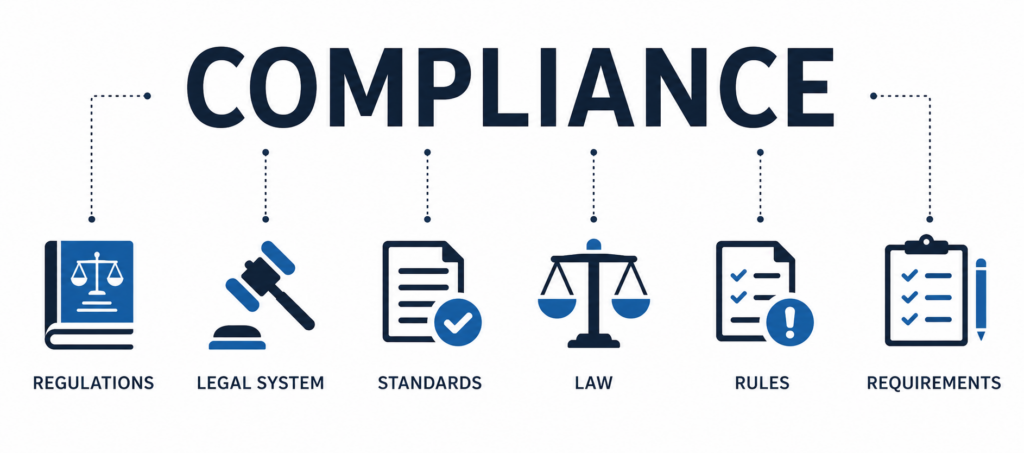
Statutory compliance refers to the legal responsibilities employers must follow under Indian labour and employment laws.
For manufacturing companies, this usually includes Provident Fund contributions, ESIC deductions, gratuity management, Professional Tax compliance, payroll records, overtime tracking, and factory-related labour law documentation.
Most manufacturers already know these laws exist.
The difficult part is maintaining compliance consistently every month while managing large workforces, contractor movement, multiple shifts, overtime calculations, and employee lifecycle changes.
Imagine a factory operating across multiple locations with permanent employees, seasonal workers, and contract labour.
Attendance flows in from different shifts every day.
Payroll structures vary across departments.
Employees join and exit regularly.
Now add monthly filings, statutory deductions, labour registers, and state-wise compliance rules into the mix.
That is where compliance starts becoming operationally difficult.
And the biggest problem with compliance mistakes is that they usually become visible late.
Sometimes during an inspection.
Sometimes during payroll reconciliation.
Sometimes after an employee dispute.
In many cases, businesses only realize there is an issue when a challan gets rejected or records fail during verification.
The Core Compliance Areas Every Manufacturer Must Manage
Most manufacturing businesses already know what PF, ESIC, gratuity, and labour law compliance are. The difficult part is managing all of them together every month without operational gaps.
That challenge becomes much bigger when factories operate across multiple shifts, locations, and workforce categories.
A single manufacturing unit may have permanent employees, contract workers, seasonal labour, overtime calculations, and different payroll structures running simultaneously.
Every one of these variables affects compliance.
PF Compliance
Under the Employees’ Provident Funds and Miscellaneous Provisions Act, establishments with 20 or more employees must register for EPF.
On paper, PF compliance sounds straightforward.
In reality, HR teams regularly deal with onboarding delays, incorrect UAN mapping, mismatched payroll records, and contribution errors that create filing problems later.
Something as small as attendance not syncing correctly with payroll can affect PF calculations.
Once that happens, the issue spreads beyond payroll and starts affecting compliance records, employee deductions, and audit readiness.
ESIC Compliance
ESIC applies to factories and establishments in notified areas with 10 or more employees drawing wages within the prescribed threshold.
In manufacturing businesses, ESIC becomes especially important because of shift-based operations, contract workers, and workforce movement across plants.
One common mistake manufacturers make is assuming contractors alone are responsible for ESIC registration. In reality, the principal employer can still face liability if the contractor defaults.
Gratuity Compliance
Under the Payment of Gratuity Act, gratuity becomes payable when an employee completes five years of continuous service.
The challenge is not understanding gratuity.
The challenge is tracking it properly.
In many factories, gratuity calculations still happen manually during employee exits.
HR teams pull old records, verify years of service, check leave encashment, and calculate final payouts separately.
This increases the chances of delays and calculation errors.
Labour Law and Factory Compliance
Manufacturers also need to maintain compliance under laws such as:- Factories Act
- Minimum Wages Act
- Contract Labour Act
- Maternity Benefit Act
- Professional Tax regulations
PF vs ESIC vs Gratuity: Key Differences
|
Aspect |
PF Compliance |
ESIC Compliance |
Gratuity |
|
Applicability |
20+ employees |
10+ employees |
10+ employees |
|
Employee Contribution |
12% |
0.75% |
None |
|
Employer Contribution |
12% |
3.25% |
Based on years of service |
|
Filing Frequency |
Monthly |
Monthly |
On employee exit |
|
Key Risk |
Penalties and interest |
Loss of employee benefits |
Legal disputes |
The Complete Statutory Compliance Checklist for Manufacturers
PF Compliance Checklist
Manufacturers should ensure that:
- Eligible employees are enrolled under EPF
- UAN (Universal Account Number) records are updated correctly
- Monthly ECR (Electronic Challan cum Return) filings are completed before the deadline
- Employee exits are updated promptly
- PF nomination forms are maintained
- Contribution calculations match payroll records
A lot of compliance issues begin when payroll and employee records are disconnected from each other.
ESIC Compliance Checklist
Manufacturing HR teams should verify that:
- Eligible employees are registered under ESIC
- Contributions are deducted correctly every month
- ESIC challans are filed on time
- Employee wage records are accurate
- Joiners and exits are updated quickly
- Accident and attendance records are maintained properly
For factories handling contract labour, this area requires even closer monitoring.
Gratuity Compliance Checklist
Manufacturers should maintain:
- Employee service records
- Gratuity nomination forms
- Exit settlement workflows
- Accurate last drawn salary records
- Gratuity payout timelines
A resignation should not trigger a last-minute search for employee history. The system should already have everything ready.
Labour Law & Factory Compliance Checklist
Manufacturing businesses must also maintain:
- Muster rolls
- Wage registers
- Overtime records
- Leave records
- Minimum wage compliance
- State-wise Professional Tax deductions
- Contract labour documentation
For businesses operating in multiple states, compliance becomes even more difficult because tax slabs and filing schedules vary by location.
Common Compliance Mistakes Manufacturers Still Make

1. Payroll runs before attendance is actually ready
The HR team processes payroll on the 28th but attendance from some locations is not synced yet.
Wrong figures go out.
Next month, corrections happen manually.
2. New joiners are added to records but not enrolled on PF and ESIC portals
A new employee joins on the 3rd.
HR creates their profile but the portal update happens separately and misses the 15th cutoff.
The employee has no coverage for that month.
3. Salary revisions are approved but never updated in the payroll
Increments get signed off in April.
The offer letter is updated.
But the payroll file is maintained separately by someone else and the old salary runs for two more months.
PF deductions are now wrong for that period.
4. Full and final settlement is done manually across multiple files
When someone resigns, HR opens the leave sheet, the salary sheet, and the loan tracker separately and calculates the F&F by hand.
Things get missed.
A 5-year employee’s gratuity gets skipped because nobody flagged it.
5. Statutory reports are rebuilt from scratch every month
The payroll team exports data, manually reformats it into the ECR template, checks UANs one by one, and uploads. One wrong column and the file is rejected.
What Compliance Management Looks Like in a Modern Manufacturing Setup
A modern compliance process does not rely on disconnected spreadsheets, handwritten registers, and scattered employee records.
In a more structured setup, attendance flows directly from biometric devices into payroll systems, statutory deductions are calculated automatically, and employee exits trigger gratuity and full-and-final settlement workflows without manual coordination.
Instead of rebuilding reports every month, HR teams can generate statutory documents directly from centralized employee and payroll records while also tracking filing deadlines before they become urgent issues.
The goal is not replacing HR teams. The goal is reducing operational dependency on disconnected systems and repetitive manual work.
This is where a proper HR management suite becomes useful for manufacturers handling large workforces and multiple plant locations.
How Byte Elephants’ HREasy Helps Manufacturers Stay Compliant
Manual compliance management, separate registers, handwritten challans, Excel ECR files, is not just slow. It is error-prone in ways that only become visible when a notice arrives. HREasy is built for exactly this problem.
Auto Deduction of PF, ESIC, PT, LWF, and TDS
HREasy’s Payroll Management System automatically calculates and deducts PF, ESIC, Professional Tax, Labour Welfare Fund, and TDS as part of every payroll run.
There is no separate calculation step and no scope for the wrong figure being applied to the wrong employee category. Contributions are computed correctly against the right wage heads every time.
Single-Click Payroll Creation and All Statutory Reports
Once payroll is processed, HREasy generates all required statutory reports in one click. ECR files for EPFO, ESIC contribution statements, PT registers, and other compliance documents are ready for filing without manual reformatting.
This is what ‘autogenerated reports that minimise legal risk’ actually looks like in practice.
Gratuity and Full & Final Settlement Automation
When an employee exits, HREasy’s Offboarding Management System automatically reflects gratuity dues, accumulated leave encashment, and incentives in the Full & Final settlement calculation.
PF and ESIC records are updated and statutory reports for the exit are generated as part of the same workflow.
Nothing is missed, and the 30-day gratuity payment window is easy to meet.
Statutory Calendar — Never Miss a Deadline
Byte Elephants’ HREasy includes a built-in Statutory Calendar. PF filing dates, ESIC challan deadlines, PT remittance schedules, and return due dates are tracked in the system.
HR teams get the visibility they need to plan ahead, not scramble at month-end.
Cloud-Based Access for Multi-Location Plants
HREasy is a cloud-based system accessible from web and mobile, which means HR at your head office and the payroll team at a plant in another state are always working with the same data.
Centralised records, multi-location support, and role-based access ensure that compliance is consistent across every facility.
Biometric Integration and Accurate Attendance for Compliance
Many compliance obligations such as overtime calculation under the Factories Act, leave entitlement, minimum wage verification, depend on accurate attendance data.
HREasy integrates directly with biometric devices and supports Excel import, so the attendance foundation your compliance calculations rest on is reliable.
Manufacturing Runs on Systems. Compliance Shouldn’t Run on Spreadsheets.
Manufacturing businesses already manage production targets, labour operations, inventory movement, and workforce planning every single day.
Compliance should not become another uncontrolled process layered on top of all that operational pressure.
The manufacturers that stay audit-ready are usually not the ones with the largest HR teams. They are the ones operating with structured HRMS systems, centralized records, and fewer manual dependencies.
If your HR team is still managing PF filings, ESIC records, gratuity calculations, and labour law compliance through disconnected spreadsheets and registers, this may be the right time to rethink the process.
FAQs
What is statutory compliance for manufacturers?
Statutory compliance for manufacturers refers to legal obligations related to labour law, payroll, PF, ESIC, gratuity, Professional Tax, and factory-related employee records that businesses must maintain under Indian law.
What is the PF filing deadline for manufacturers?
PF contributions and ECR filings must generally be completed by the 15th of the following month.
Is ESIC applicable to contract workers?
Yes. Eligible contract workers must also be covered under ESIC. The principal employer can still face liability if contractors fail to comply.
When does gratuity become payable?
Gratuity becomes payable after five years of continuous service when an employee resigns, retires, or exits the organization.
How does HRMS help with statutory compliance?
HRMS software helps automate payroll calculations, statutory deductions, attendance tracking, reporting, filing preparation, employee records, and compliance deadline monitoring.